
Summary: 7 New E-Commerce Rules for 2026 in the Era of Confidence Commerce
Deep dive into insights from the Marketing Oops! Summit 2026: When price is no longer the sole deciding factor, brands must compete to help customers make decisions through AI and the right experiences.


Integrate your CRM with other tools
Lorem ipsum dolor sit amet, consectetur adipiscing elit lobortis arcu enim urna adipiscing praesent velit viverra sit semper lorem eu cursus vel hendrerit elementum morbi curabitur etiam nibh justo, lorem aliquet donec sed sit mi dignissim at ante massa mattis.
- Neque sodales ut etiam sit amet nisl purus non tellus orci ac auctor
- Adipiscing elit ut aliquam purus sit amet viverra suspendisse potenti
- Mauris commodo quis imperdiet massa tincidunt nunc pulvinar
- Adipiscing elit ut aliquam purus sit amet viverra suspendisse potenti
How to connect your integrations to your CRM platform?
Vitae congue eu consequat ac felis placerat vestibulum lectus mauris ultrices cursus sit amet dictum sit amet justo donec enim diam porttitor lacus luctus accumsan tortor posuere praesent tristique magna sit amet purus gravida quis blandit turpis.

Techbit is the next-gen CRM platform designed for modern sales teams
At risus viverra adipiscing at in tellus integer feugiat nisl pretium fusce id velit ut tortor sagittis orci a scelerisque purus semper eget at lectus urna duis convallis. porta nibh venenatis cras sed felis eget neque laoreet suspendisse interdum consectetur libero id faucibus nisl donec pretium vulputate sapien nec sagittis aliquam nunc lobortis mattis aliquam faucibus purus in.
- Neque sodales ut etiam sit amet nisl purus non tellus orci ac auctor
- Adipiscing elit ut aliquam purus sit amet viverra suspendisse potenti venenatis
- Mauris commodo quis imperdiet massa at in tincidunt nunc pulvinar
- Adipiscing elit ut aliquam purus sit amet viverra suspendisse potenti consectetur
Why using the right CRM can make your team close more sales?
Nisi quis eleifend quam adipiscing vitae aliquet bibendum enim facilisis gravida neque. Velit euismod in pellentesque massa placerat volutpat lacus laoreet non curabitur gravida odio aenean sed adipiscing diam donec adipiscing tristique risus. amet est placerat.
“Nisi quis eleifend quam adipiscing vitae aliquet bibendum enim facilisis gravida neque velit euismod in pellentesque massa placerat.”
What other features would you like to see in our product?
Eget lorem dolor sed viverra ipsum nunc aliquet bibendum felis donec et odio pellentesque diam volutpat commodo sed egestas aliquam sem fringilla ut morbi tincidunt augue interdum velit euismod eu tincidunt tortor aliquam nulla facilisi aenean sed adipiscing diam donec adipiscing ut lectus arcu bibendum at varius vel pharetra nibh venenatis cras sed felis eget.
In an era where artificial intelligence (AI) is advancing rapidly and consumer behavior shifts daily, the e-commerce battlefield in 2026 is no longer just about the old rules of who has more inventory, who offers lower prices, or who delivers the fastest. We are entering the era of "Confidence Commerce," a time when consumers choose to buy from brands and platforms that can create experiences and provide the most support in building confidence for their purchasing decisions.
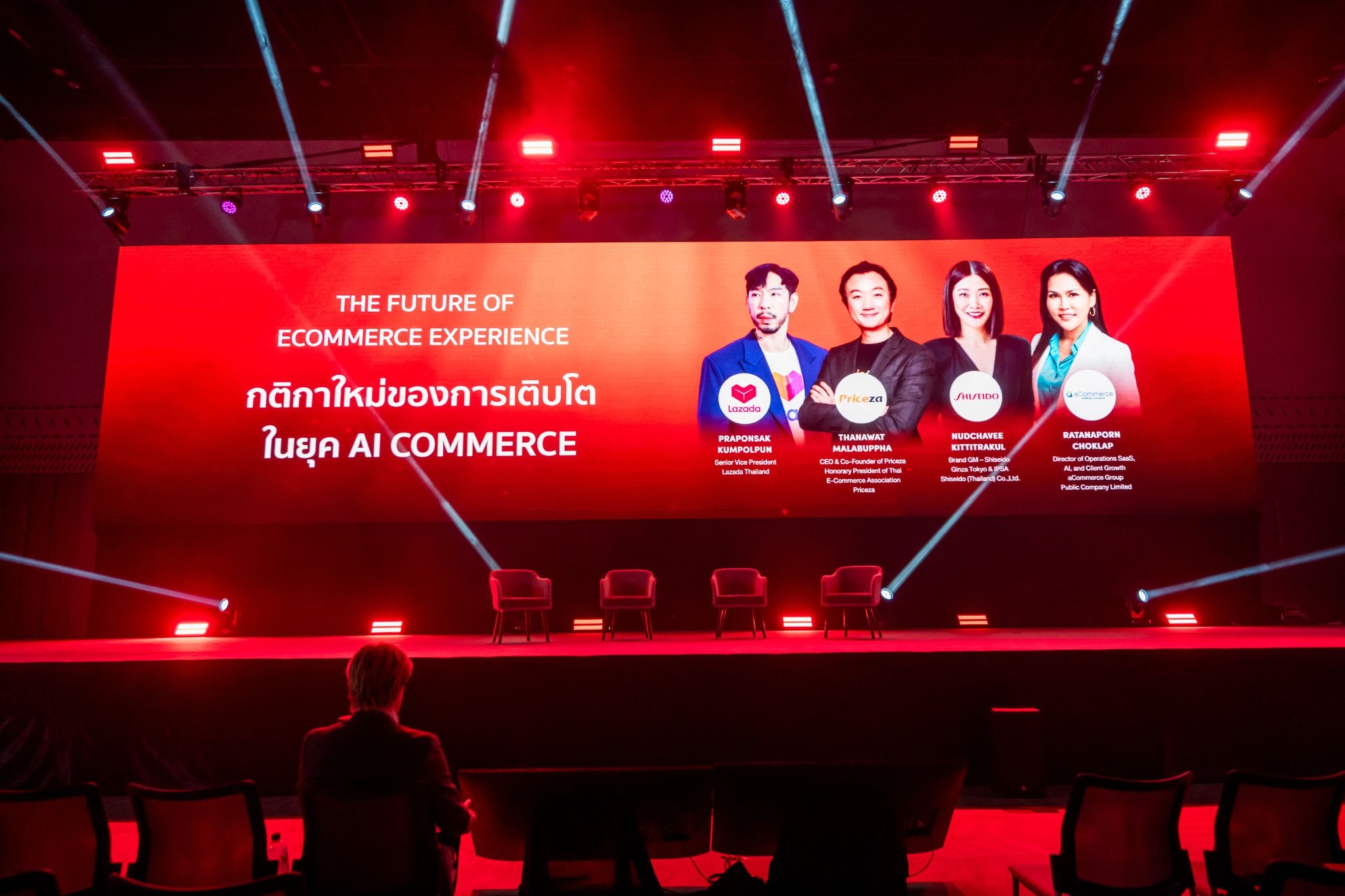
On the Action Stage at the Marketing Oops! Summit 2026, during the keynote session titled "The Future of Ecommerce Experience: Personalization, AI and the New Rules of Growth," three key figures from three sectors of the digital commerce industry gathered: Khun Coffee Praphonsak Kamphonphan (SVP, Lazada Thailand), Khun Vee Nuchavee Kittitrakul (GM, Shiseido), and Khun Wai Thanawat Malabuppha (CEO, Priceza) to share their vision on the new rules for online business growth.
Here are 7 key takeaways that entrepreneurs, brands, and marketers need to know to adjust their strategies for the future that has already arrived.
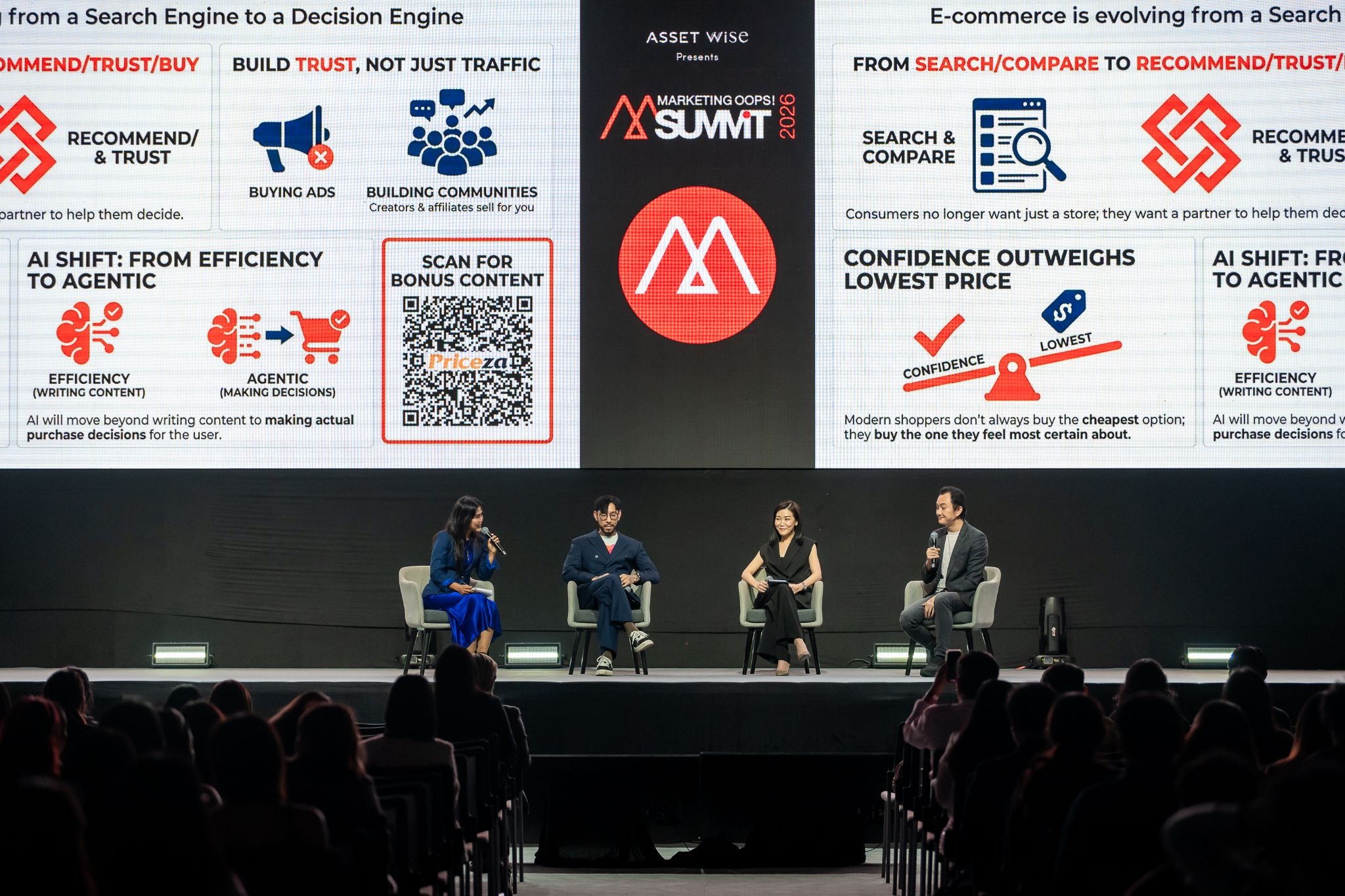
1. The transition from Search Engine to "Decision Engine"
The first rule that has clearly changed is the consumer's information-seeking process. In the past (E-Commerce Gen 1), consumers used a search bar to type broad keywords like "sunscreen," and the system would display thousands of product results for the customer to sift through themselves.
Today (E-Commerce Gen 2), buyer behavior has shifted toward relying on more sophisticated tools. Customers now ask highly specific, conditional questions such as, "What sunscreen should a 40-year-old with sensitive skin use for playing golf?" This means the role of brands, platforms, and AI is no longer just about being searchable; it is about acting as a tool to analyze, filter, and support decision-making (a Decision Engine) so that buyers get the most suitable answer without having to waste time comparing options themselves.

2. Price and promotions still matter, but the "fear of buying the wrong thing" has more influence.
Even though Thai consumers still prioritize price and love a good deal, backend data reveals a new insight: what consumers worry about more than price today is the "fear of buying the wrong thing."
Often, consumers are willing to pay about 10% more if they are confident that the product is authentic, truly addresses their specific problems, has high-quality reviews, and is recommended by individuals or communities they trust. This is a major reason why affiliate marketing, user-generated content (UGC), creator groups, and live commerce have grown tremendously, as these channels serve to address the need for trust before the payment is made.
3. The new definition of AI: From an efficiency tool to "deciding on behalf of the user."
The application of AI technology, from Priceza's perspective, is divided into 3 layers based on development and complexity as follows:
- AI Layer 1 - Efficiency: The level of improving general work efficiency, such as using AI to help with basic chat responses, content writing, or generating graphics, which is now considered a baseline standard that every brand can access.
- AI Layer 2 - Personalization: The level of learning the unique needs of each individual customer to present information, products, or special offers tailored specifically to them.
- AI Layer 3 - Agentic Commerce: This is the true turning point of 2026, where AI systems step up to act as personal shoppers capable of analyzing data, comparing options, and "making purchase decisions on behalf of" some consumers.
Therefore, the new challenge brands must ask themselves is: In the past, how did we make our brand searchable? But from now on, how do we make our brand one that artificial intelligence chooses to recommend (an AI Recommended Brand)?
4. A customer journey that has shifted away from the traditional funnel concept.
In the past, marketers were accustomed to mapping out a linear marketing funnel from top to bottom, starting from awareness and consideration to the final purchase. Today, however, the consumer journey has become fragmented and non-linear, shifting into a web-like structure where customers can jump freely between platforms. For example, they might see a product on TikTok, check reviews on YouTube, search further on Google, ask an AI, then jump to a marketplace to purchase, and contact customer service via LINE.
The new challenge for brands is no longer "how do we control the customer's path," but rather, "how do we maintain a consistent presence, product information, and experience at every touchpoint?"
5. Modern personalization is not just about recommending similar products.
The term "personalization" in the past was often interpreted simply: when a customer bought product A, the backend system would suggest similar product B. But for modern personalization, the key is to provide information that supports the customer's decision-making process (Personalized Decision Support).
Imagine three consumers who want to buy the same model of sunscreen, but their reasons or pain points are completely different:
- The first person might be highly concerned about sensitive skin.
- The second person is concerned about budget and value for money.
- The third person wants to prioritize sun protection performance for outdoor activities.
The goal of modern personalization is for brands to deliver different content, descriptions, and proof points to these three customers, even if they are ultimately purchasing the same product.
6. Transform marketplaces from "sales spaces" into "experience spaces."
A major challenge for brands, especially premium or luxury ones, is how to maintain a luxurious experience and reflect their core values when opening a storefront on an e-commerce marketplace.
An interesting concept is that brands should not view marketplace platforms merely as spaces to list products or run price-cutting promotions for daily sales and views; every platform is a reflection of the brand's presence.
Collaboration between brands and platforms must therefore be elevated by merging brand moments with platform campaigns. For example, connecting online and offline (O2O) experiences through product sampling at on-ground events can help acquire new customers and drive conversions back to the online store.
7. The new rules of growth: Build trust and let "others help you sell."
The business model for driving e-commerce in the past often relied on buying traffic to bring people into the system and then attempting to convert those visitors into sales.
But as advertising costs continue to rise and consumers become less likely to trust direct brand messaging, the new rule for sustainable growth has shifted to "building trust and letting the external ecosystem do the selling for you." The brands that thrive and generate the best profits today may not be those with the biggest banner ad budgets, but those that can best amplify their voice through creators, influencers, communities, affiliate partners, and authentic user reviews.
📌 Strategic summary for entrepreneurs
The new growth rules for 2026 clearly state that technology and artificial intelligence (AI) will serve as tools to analyze backend data signals, expanding the ability to understand customer behavior more deeply. However, what technology cannot replace is the "human touch," sincerity, and maintaining the service standards delivered to customers.
A practical takeaway for brands looking to elevate their e-commerce in the short term is: "Do not start with technology or AI systems; always start by studying the customer journey and consumer insights first." Try to answer these three key questions as clearly as possible:
- Where do your customers search for product information?
- Whose recommendations do your customers choose to trust?
- What are your customers struggling with or hesitant about?
Once a brand fully understands the insights behind these three questions, applying technology and personalization strategies to close gaps and support customer decision-making will become the key to ensuring your online brand stands firm and grows steadily in this era of Confidence Commerce.


