
2026 D2C Strategy: How to handle rising marketplace costs
D2C Strategy 2026: Navigating rising marketplace fees, complex customer journeys, and the need for data-driven long-term customer relationships.

Integrate your CRM with other tools
Lorem ipsum dolor sit amet, consectetur adipiscing elit lobortis arcu enim urna adipiscing praesent velit viverra sit semper lorem eu cursus vel hendrerit elementum morbi curabitur etiam nibh justo, lorem aliquet donec sed sit mi dignissim at ante massa mattis.
- Neque sodales ut etiam sit amet nisl purus non tellus orci ac auctor
- Adipiscing elit ut aliquam purus sit amet viverra suspendisse potenti
- Mauris commodo quis imperdiet massa tincidunt nunc pulvinar
- Adipiscing elit ut aliquam purus sit amet viverra suspendisse potenti
How to connect your integrations to your CRM platform?
Vitae congue eu consequat ac felis placerat vestibulum lectus mauris ultrices cursus sit amet dictum sit amet justo donec enim diam porttitor lacus luctus accumsan tortor posuere praesent tristique magna sit amet purus gravida quis blandit turpis.

Techbit is the next-gen CRM platform designed for modern sales teams
At risus viverra adipiscing at in tellus integer feugiat nisl pretium fusce id velit ut tortor sagittis orci a scelerisque purus semper eget at lectus urna duis convallis. porta nibh venenatis cras sed felis eget neque laoreet suspendisse interdum consectetur libero id faucibus nisl donec pretium vulputate sapien nec sagittis aliquam nunc lobortis mattis aliquam faucibus purus in.
- Neque sodales ut etiam sit amet nisl purus non tellus orci ac auctor
- Adipiscing elit ut aliquam purus sit amet viverra suspendisse potenti venenatis
- Mauris commodo quis imperdiet massa at in tincidunt nunc pulvinar
- Adipiscing elit ut aliquam purus sit amet viverra suspendisse potenti consectetur
Why using the right CRM can make your team close more sales?
Nisi quis eleifend quam adipiscing vitae aliquet bibendum enim facilisis gravida neque. Velit euismod in pellentesque massa placerat volutpat lacus laoreet non curabitur gravida odio aenean sed adipiscing diam donec adipiscing tristique risus. amet est placerat.
“Nisi quis eleifend quam adipiscing vitae aliquet bibendum enim facilisis gravida neque velit euismod in pellentesque massa placerat.”
What other features would you like to see in our product?
Eget lorem dolor sed viverra ipsum nunc aliquet bibendum felis donec et odio pellentesque diam volutpat commodo sed egestas aliquam sem fringilla ut morbi tincidunt augue interdum velit euismod eu tincidunt tortor aliquam nulla facilisi aenean sed adipiscing diam donec adipiscing ut lectus arcu bibendum at varius vel pharetra nibh venenatis cras sed felis eget.
Marketplaces remain a cornerstone of Thailand’s e-commerce landscape, valued for their massive user base, convenience, payment systems, promotions, and logistics. However, as platform selling costs rise and consumer journeys become increasingly complex, relying solely on marketplaces may no longer be enough to sustain long-term growth.
The solution isn't to abandon marketplaces for a full-scale D2C model, but to redefine the role of each channel so they work in harmony. Marketplaces can serve as engines for customer acquisition and conversion, while D2C should be the space where brands build deeper connections, gather data, and nurture long-term relationships.
These key insights were shared during the session “E-commerce Insights: Essential Stats for Marketers” by Thanawat Malabuppha, CEO & Co-Founder of Priceza and Honorary President of the Thai E-Commerce Association, at the PRIMO Presents Content Shifu Meetup #8: AI-Powered D2C
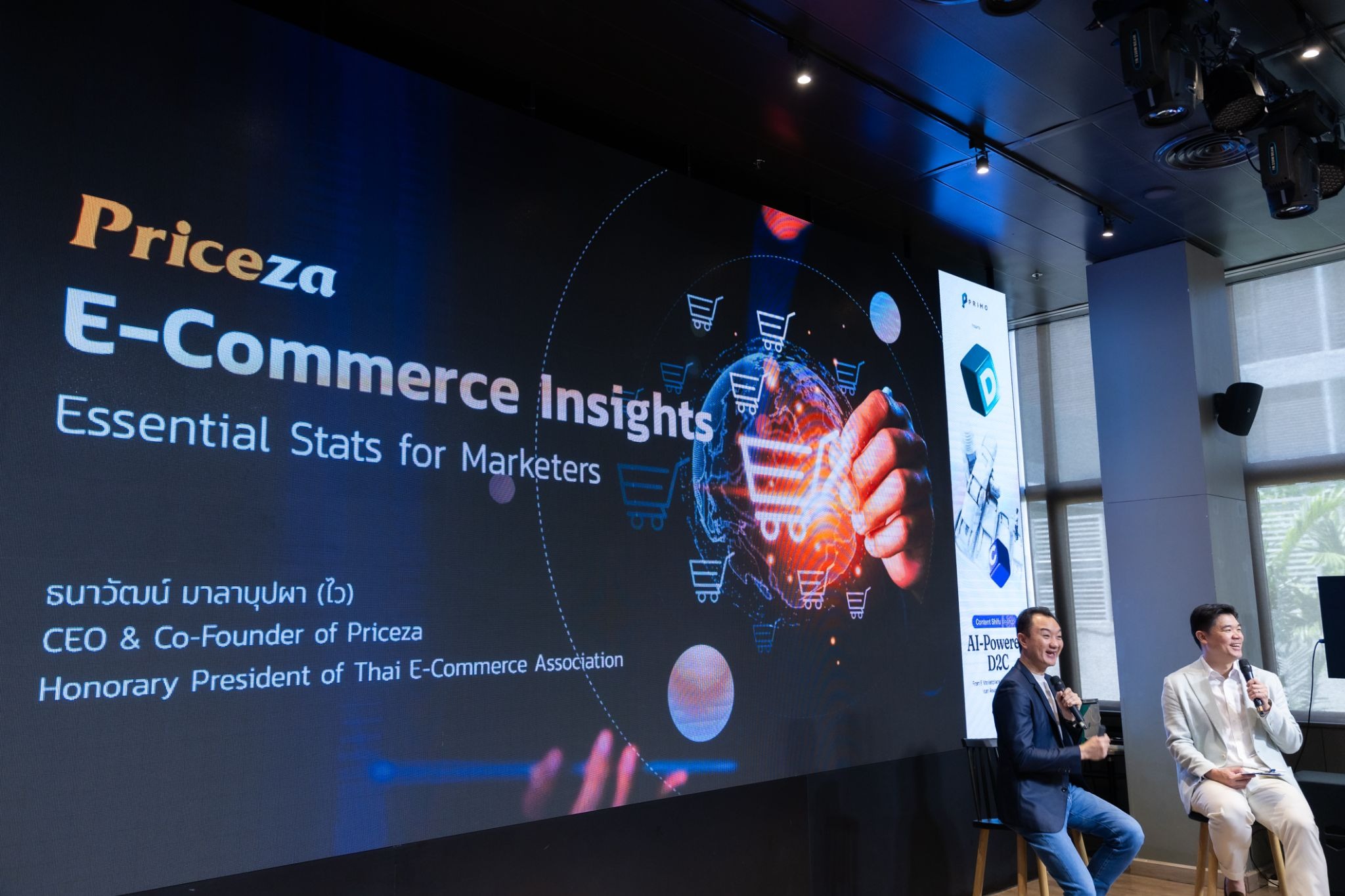
Marketplaces are still vital, but the cost structure is shifting.
In the early days of e-commerce, major platforms invested heavily to build user bases, change consumer behavior, and attract merchants. As these platforms shift from growth-focused to profit-focused, those costs are increasingly passed on to sellers. Data presented in the session suggests that total marketplace fees and selling costs can now range from 8–17% of sales, depending on the product category, participation in specific programs, and platform terms.
These costs go beyond basic commissions and include:
- Payment processing fees
- Free shipping or discount program participation fees
- Advertising costs for visibility
- Service or add-on program fees
- Merchant-subsidized discounts
- Costs associated with installment plans or Buy Now, Pay Later services
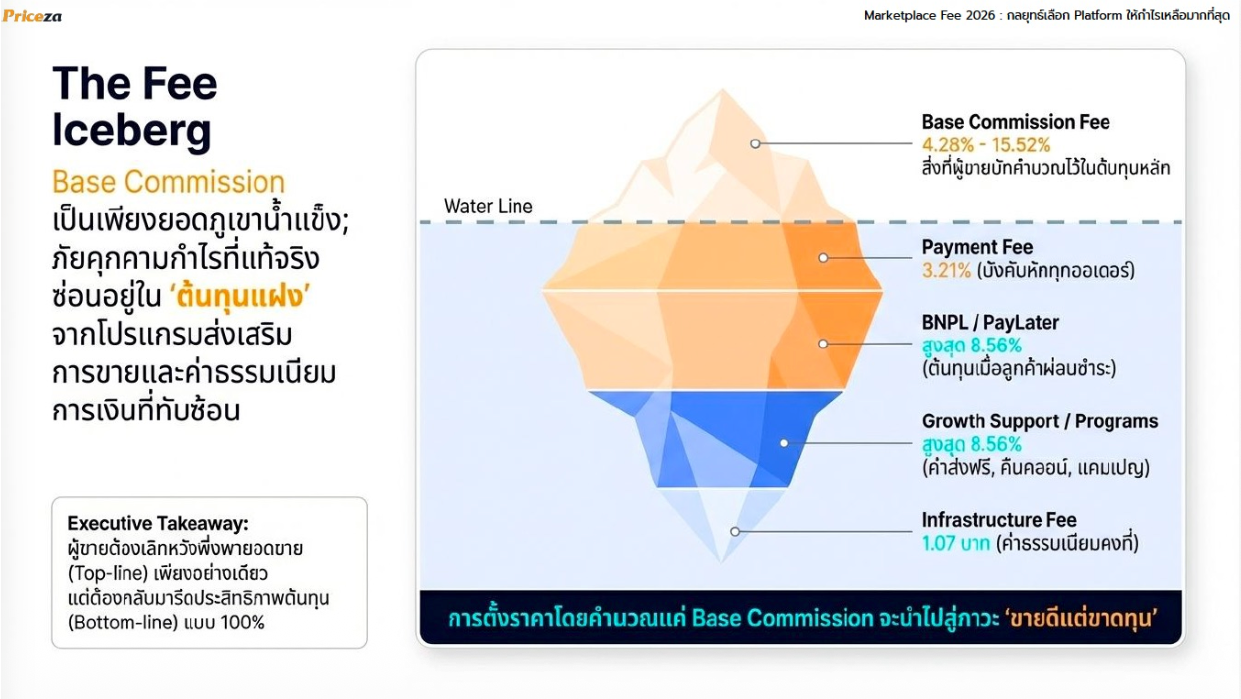
The challenge for sellers is no longer just "how to increase sales," but "how much profit remains after fees, ads, discounts, and overhead?" The e-commerce game in 2026 won't be measured by GMV alone; it will be defined by margins, customer acquisition costs, repeat purchases, and customer lifetime value.
The customer journey is no longer a straight line.
Traditional marketing funnels suggest a linear path from awareness to consideration and purchase. In reality, modern consumer behavior is chaotic and unpredictable—often described as a “Spaghetti Journey.” Consider a customer looking for running shoes to help with knee pain:
- They start by watching real-world reviews on TikTok,
- ask ChatGPT to compare pros and cons,
- visit the brand’s website to read about product technology,
- watch long-form reviews on YouTube for reassurance,
- compare prices and add items to their cart on a marketplace,
- and wait for a promotional day or watch a live stream before finally deciding to buy.
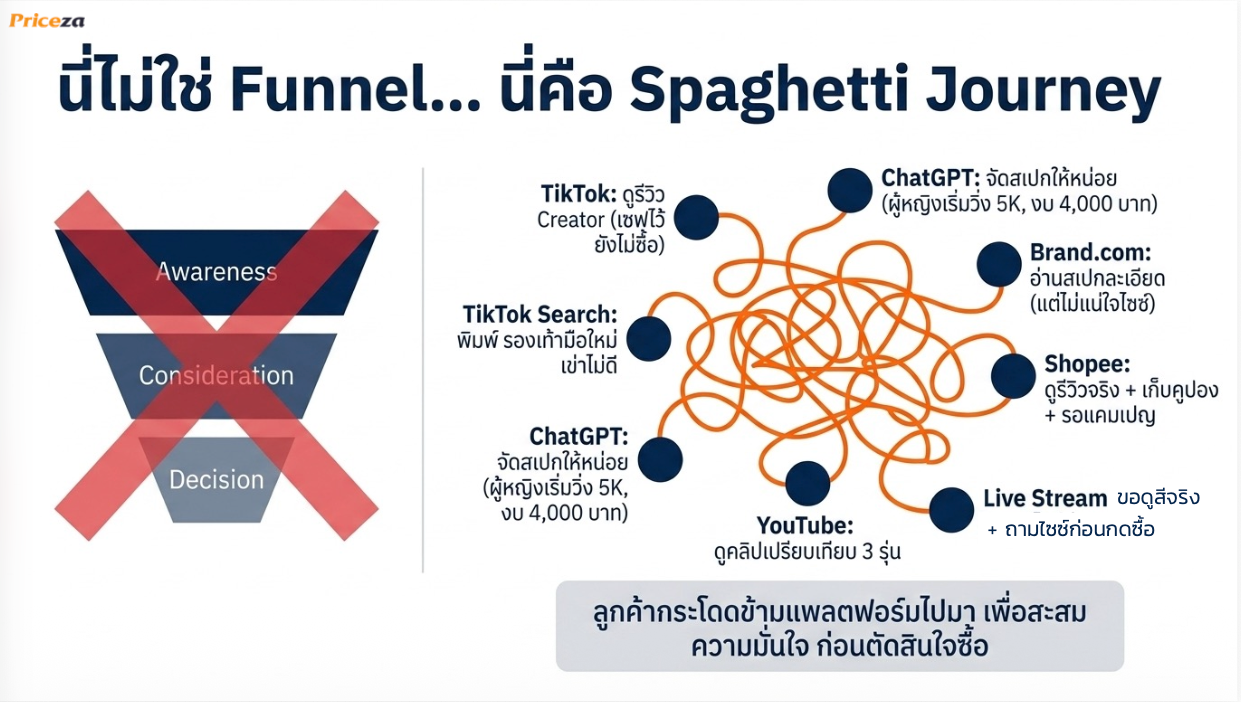
A single customer may jump between content, creators, AI search, social media, brand websites, and marketplaces multiple times before deciding. To the customer, it’s one continuous journey with the brand. To the brand’s fragmented systems, this person appears as a TikTok viewer, an anonymous website visitor, a LINE follower, and a marketplace buyer—with no data connecting them.
Brand Amnesia: When the customer remembers the brand, but the brand doesn't remember the customer.
When data from different touchpoints is siloed, brands suffer from “Brand Amnesia,” where they fail to recognize their own customers. The brand doesn't know what products the customer has viewed, what information they’ve read, what their pain points are, or what they’ve already purchased. The result is a disjointed experience, such as:
- Retargeting ads for a product the customer just bought.
- Recommending products irrelevant to the customer’s needs.
- Sending generic, one-size-fits-all messages to everyone.
- Inability to provide follow-up service after a purchase.
- Wasting ad spend on retargeting people who don't need to see the ad again.
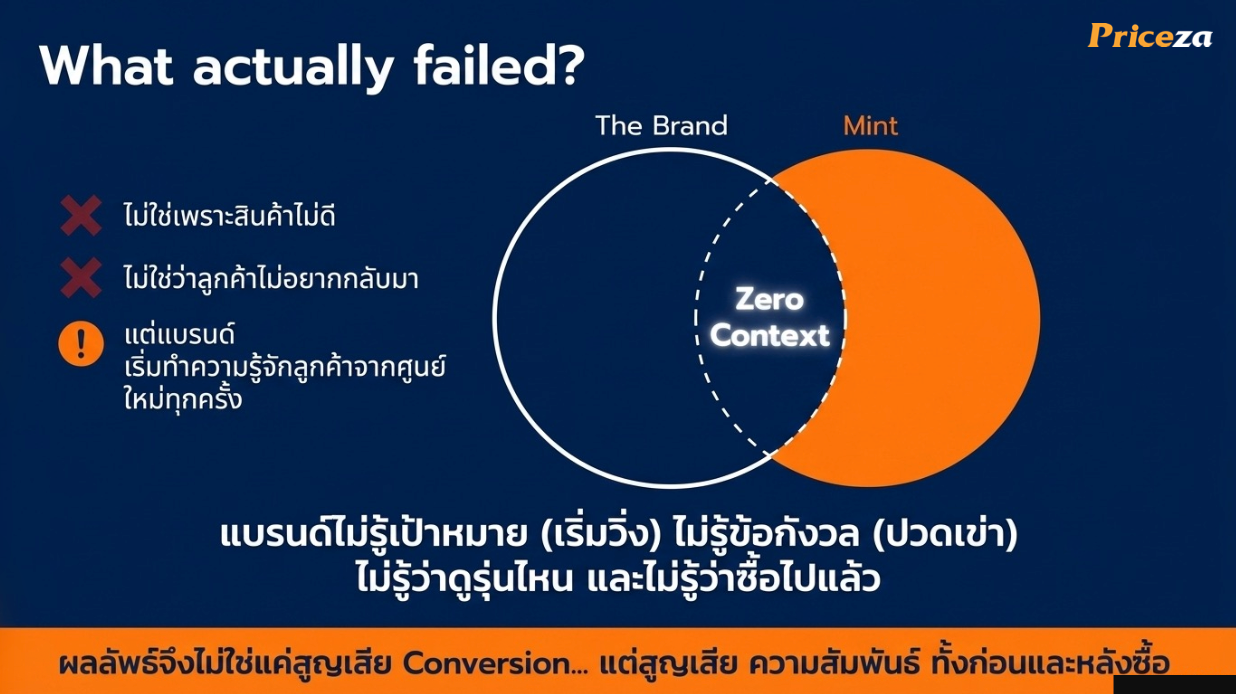
This doesn't just waste advertising budget—it destroys opportunities to build trust, encourage repeat purchases, and foster long-term relationships.
Thai consumers make purchasing decisions based on the “6 Goods”
Online shopping is no longer driven by price alone. Based on the framework presented in the session, Thai consumers look for value across six key areas:
1. Good Price
Reasonable pricing, discounts, coupons, or benefits that provide a sense of value for money.
2. Good Variety
A wide range of products, options, models, colors, and sizes that meet specific needs.
3. Good Quality
Products that match their descriptions, backed by reliable reviews, warranties, and clear return policies.
4. Good Delivery
Fast shipping, real-time tracking, and an increasingly immediate response to consumer needs.
5. Good Fun
Shopping experiences integrated with content, creators, livestreams, and entertainment.
6. Good Personalization
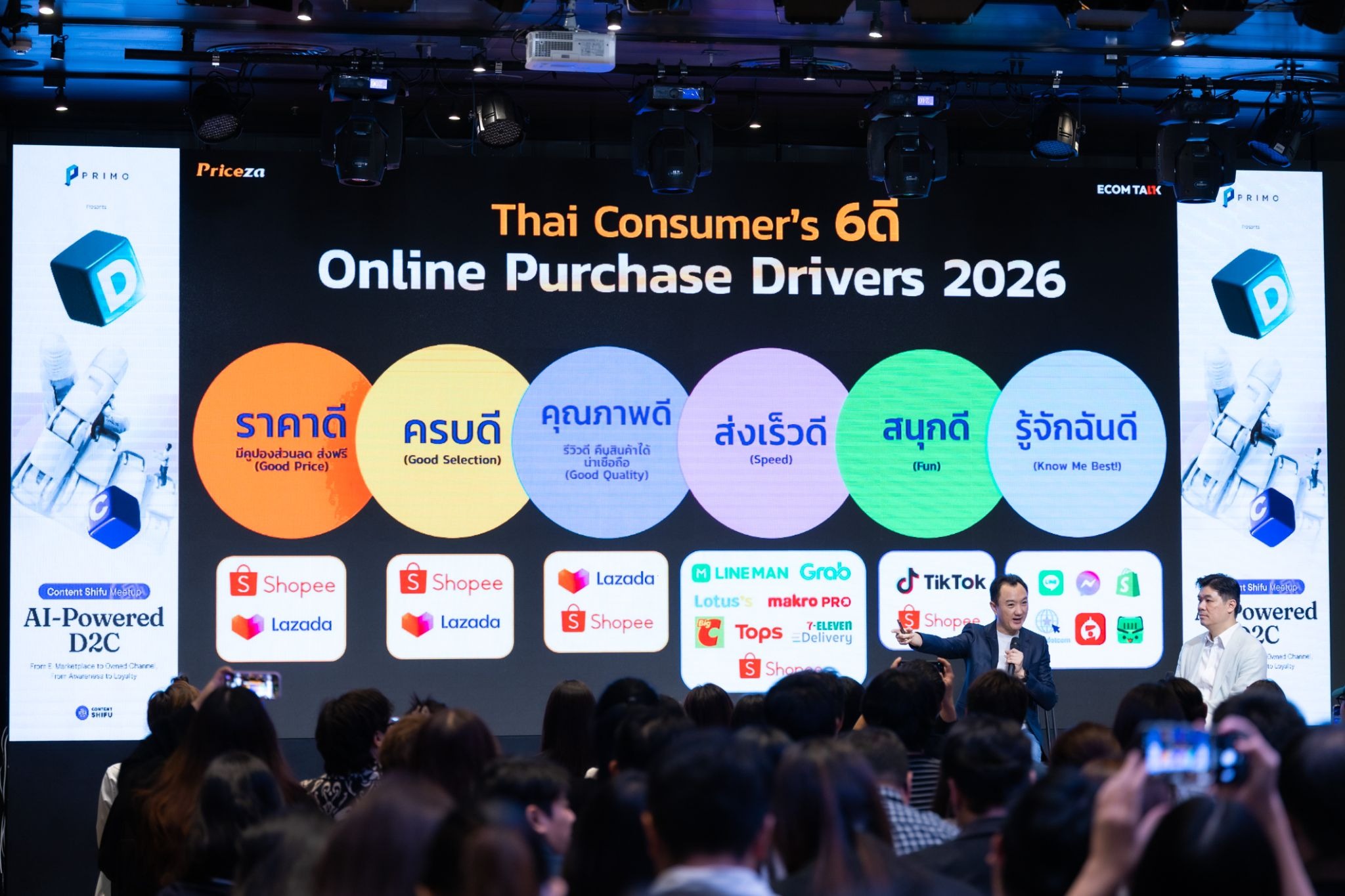
Brands or platforms that understand the interests, goals, and unique context of each customer. While large marketplaces may have an edge in price, variety, speed, and entertainment, the “Good Personalization” factor is a crucial area where brands can leverage D2C to differentiate themselves.
Each platform plays a different role in the customer journey
Brands should not apply the same strategy across all platforms, as user behavior and consumer motivations vary significantly.
TikTok Shop: Creating desire through content
TikTok Shop excels at product discovery through videos, creators, and livestreams. Customers may not open the app with the intent to buy, but are inspired to purchase while consuming content.
According to data presented in the session, the Health & Beauty category performs exceptionally well on TikTok Shop, driven by reviews, demonstrations, and impulse buying behavior.
Shopee: Searching, comparing, and waiting for promotions
Shopee shoppers typically have a clearer purchase intent, using the platform to search, compare prices, read reviews, and verify store credibility. This makes the platform ideal for high-consideration products that require research before buying, such as home appliances and smartphones.
Lazada: For brands and products that require trust
Lazada plays a key role in the electronics category and for products where consumers prioritize official stores, reliability, and the experience provided by Brand Mall.
This overview reflects that
- some channels are great at generating demand,
- some are great at comparison and closing sales,
- while brand-owned channels should excel at building loyalty and customer care.
What is D2C, and what should its role be?
D2C, or Direct-to-Consumer, is when a brand sells products and builds relationships directly with consumers through channels it owns, such as a website, mobile app, LINE Official Account, or its own physical stores. However, D2C should not be interpreted as simply creating another website to compete on price and speed with marketplaces.
Marketplaces have inherent advantages in traffic, payments, logistics, promotions, and economies of scale. Trying to beat them at their own game can lead to high costs without creating sustainable differentiation. Therefore, the primary role of D2C should be as thehome base for customer data and customer relationships.
Simply put,marketplaces are spaces where customers search, compare, and buy,whileD2C is the space where brands recognize, understand, and care for their customers.
Don't compete on price; compete on "understanding."
The session compared a successful D2C brand to the "local mom-and-pop shop owner" who remembers what each customer likes, what they usually buy, and what their specific needs are, without needing to be reintroduced every time they walk through the door. For a brand, knowing a customer in this way doesn't mean collecting as much data as possible, but rather collecting data that is useful for providing service, such as:
- What are the customer's goals?
- What problems are they trying to solve?
- What are their concerns or constraints?
- What products have they already viewed or purchased?
- Which channels do they use to contact the brand?
- What kind of advice or support should they receive next?
Data from every channel should be integrated into a Unified Customer Profile under clear consent and purpose, allowing the brand to see the customer as the same individual, regardless of which touchpoint they use.
Some customers aren't paying more for the product; they are buying "peace of mind."
Based on the 60/40 framework presented in the session, while some consumers still prioritize price and promotions, another group is ready to buy directly from a brand if they receive an experience that makes them feel confident and well-cared for. For this group, the value equation isn't justprice + product,but alsopeace of mind + trust + personalized service.When marketplaces are flooded with countless products, reviews that take time to filter, and stores with varying standards, some customers are willing to pay a premium to avoid risk and buy from a trusted source. What they are paying for isn't just the product, but peace of mind—the feeling that "this brand understands what I need and will continue to look after me after the purchase."
5 Steps to Start Your D2C Strategy in 2026
1. Define the role of each channel
Brands don't need to move all sales away from marketplaces, but they should clearly define which part of the customer journey each channel handles.
Marketplaces can be used for reach and closing sales, while D2C is used for data collection, personalized service, and driving repeat purchases.
2. Give customers a reason to come to you
Customers won't switch channels just because a brand has a website; they need to receive distinct value, such as personalized recommendations, after-sales support, exclusive perks, loyalty programs, or content that helps them get more out of the product. Connecting with customers should be done transparently, in compliance with platform policies, and with the customer's consent.
3. Collect data that improves service
Don't just collect names, emails, and order history; strive to understand the goals, pain points, and context that drive a customer's decision to choose your product.
4. Unify data into a single Customer Profile
Data from websites, CRM, LINE, call centers, apps, and physical stores should be properly integrated so the brand can recognize customers consistently.
5. Design personalized aftercare
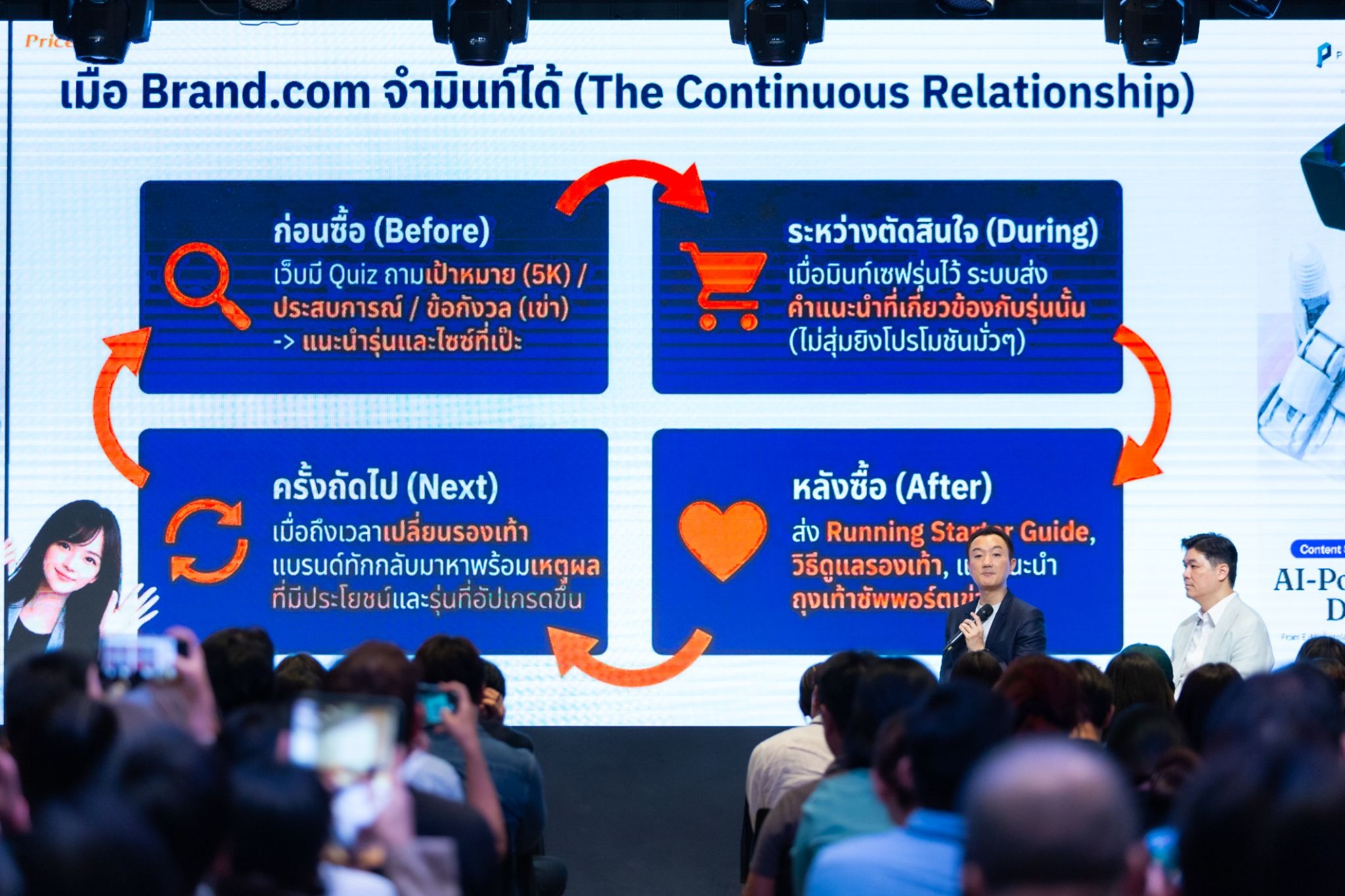
A purchase shouldn't be the end of the customer journey. If a customer buys running shoes because of knee pain, the brand could follow up, offer usage tips, or send content relevant to their running goals instead of immediately retargeting them with ads for another pair of shoes. This experience creates far more value than just sending a discount code.
Conclusion: Marketplaces aren't the enemy, and D2C isn't a shortcut
Marketplaces remain a vital part of the e-commerce ecosystem, offering strengths that brands don't need to replicate. The challenge isn't choosing between a marketplace or D2C, but designing how both channels can work together effectively. Marketplaces help brands reach demand and provide convenience, while D2C helps brands get to know their customers, connect data, and build post-purchase relationships. In an era of intense price competition, sustainable advantage may not come from offering the biggest discount, but from the ability to answer: Who is this customer, what do they need, and how should the brand continue to support them? Ultimately, some customers won't pay more for the same product, but they will pay for the feeling that “this brand truly understands me.”
Frequently asked questions about D2C
What is D2C?
D2C, or Direct-to-Consumer, is a model where brands sell products and build relationships directly with consumers through channels they own, such as websites, apps, LINE Official Accounts, or physical stores.
How do marketplaces and D2C differ?
Marketplaces excel in traffic, product comparison, promotions, payments, and purchasing convenience. D2C allows brands to control the experience, access customer data with consent, and maintain long-term relationships.
Should brands stop selling on marketplaces?
Not necessarily. Marketplaces and D2C can work together: marketplaces drive reach and sales, while D2C builds data, relationships, and repeat purchases.
What data should brands collect from D2C channels?
Collect only data with a clear purpose that helps improve the experience, such as goals, interests, pain points, purchase history, and contact history, while ensuring proper disclosure and consent.
Source: Adapted from the session “E-commerce Insights: Essential Stats for Marketers” by Thanawat Malabuppha, CEO & Co-Founder of Priceza and Honorary President of the Thai E-Commerce Association, at PRIMO Presents Content Shifu Meetup #8: AI-Powered D2C, June 24, 2026.


